
Automatic Gate Repair Houston TX — Full System Diagnosis
Automatic gate repair should evaluate the complete system: gate movement, operator, power, limits, safety devices, wiring, and access controls. Rampart diagnoses gates that will not open or close, reverse, move intermittently, or activate unexpectedly, then explains which structural or electronic condition is causing the behavior.
An automatic gate is a system, not just a motor — photo eyes, loops, safety edges, and a control board all have to agree before the gate moves safely. When one fails, the gate misbehaves. We diagnose the whole system, not just the opener.
Automatic System Faults We Fix
The safety and control layer.
- Photo eyes misaligned or failed
- Loop detectors reading phantom vehicles
- Safety edges not triggering
- Control board logic faults
- Gate reverses or won't close
- Wiring and low-voltage faults
What Is Your Automatic Gate Doing?
Every symptom points to a different layer of the system. Start here.
🔓 Gate Won’t Open
Opener powers on but gate won’t move — could be a limit setting, a binding gate, a dead battery, or a mechanical failure in the drive train. We check physical resistance first.
🔒 Gate Won’t Close
The closing direction is guarded by every safety device. A gate that opens fine but won’t close usually has a sensor fault — photo eye, loop, or safety edge — not a motor fault.
⇅ Gate Reverses When Closing
A real or phantom obstruction was detected. Sun glare on photo eyes, a loop reading a phantom vehicle, or a force setting too tight for the gate’s actual resistance. We find the real trigger.
🔴 Gate Opens By Itself
A common cause is a loop detector reading a vehicle that isn’t there. In Houston, clay soil cracking pavement over embedded loop wire breaks the loop and causes random signals. We test under real conditions.
↔ Gate Stops Halfway
The gate has hit a limit setting, a binding point, or an overload trigger. We trace the full travel path by hand before connecting to the opener — the gate structure is usually the cause.
🔄 Gate Works Sometimes
Intermittent operation most often traces to a heat-degraded battery that drops voltage under the motor’s starting load. We load-test — not just voltage-check — to catch this accurately.
What Does a Full Automatic Gate System Diagnosis Actually Cover?
Opener repair fixes the motor and its drive train; automatic gate repair fixes the whole system that makes the gate safe and self-operating — photo eyes, loop detectors, safety edges, and control logic. A gate can have a perfectly good opener and still fail because a sensor or loop has gone bad.
Think of the opener as the muscle and the automatic system as the nervous system. Most 'my automatic gate is acting up' calls — reversing, not closing, opening randomly — are sensor and control faults, not motor faults. We diagnose the system layer that opener-only shops often miss.
Automatic gate behaving strangely? We diagnose the full safety system.
Loop Detectors, Photo Eyes, and the Houston-Specific Faults We See Most
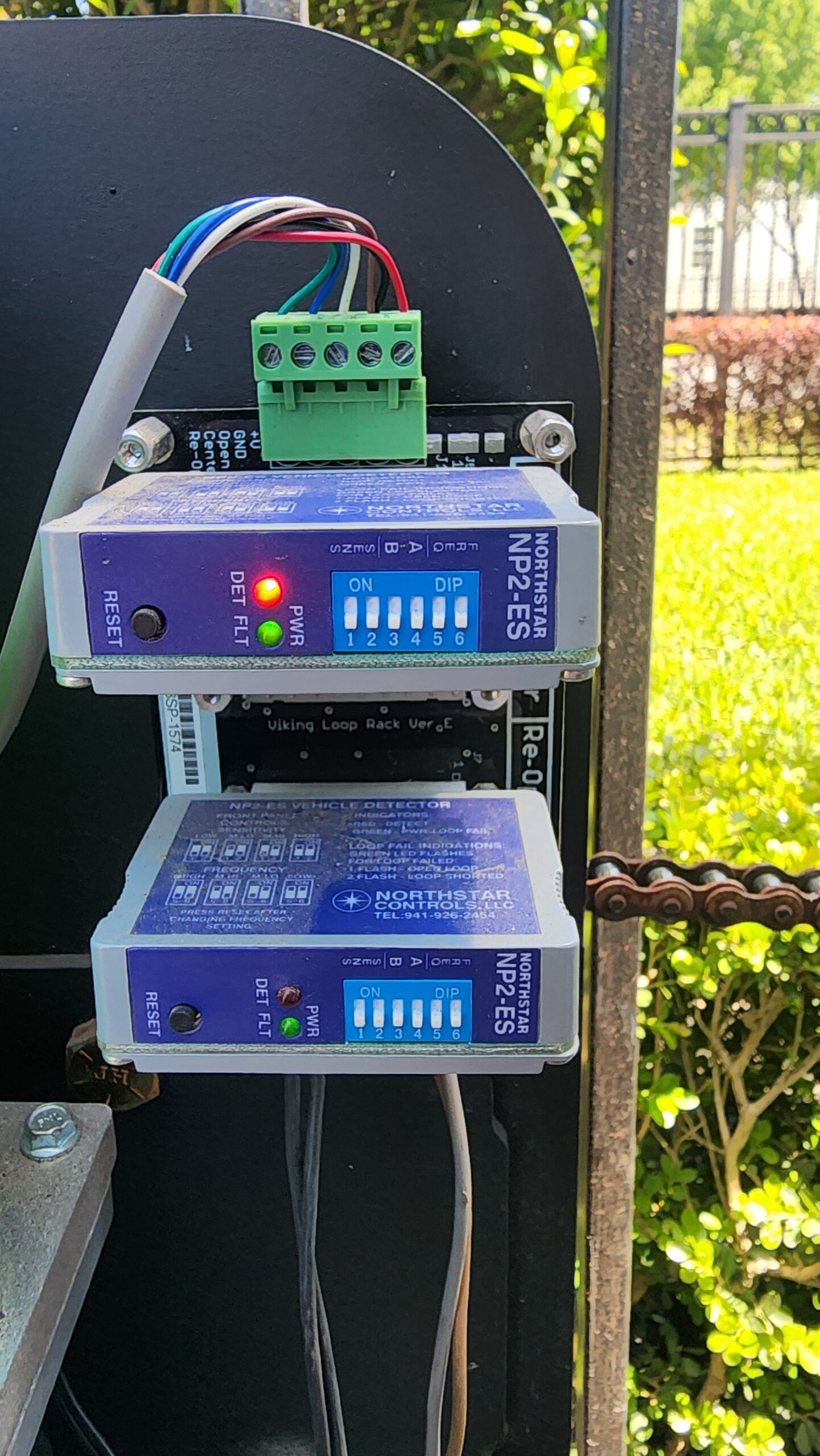
Houston’s clay soil heaves and cracks driveways seasonally. When that crack runs through the in-ground loop wire, the detector intermittently reads an open circuit as a vehicle — and the gate opens on its own. Photo eyes fail after rain or when Houston’s low sun lines up with the lens. Both are field-specific faults we diagnose and fix on-site.
We test loop detectors under real operating conditions, locate wire breaks using detection equipment, and replace loop wire or install new detectors as needed. For gates that won’t close or gates that reverse mid-travel, photo eyes and loops are among our first diagnostic checks — before touching the opener.
For full access control and entry system integration issues — where loops, keypads, and gate operators need to work together — we diagnose and service the complete input chain in one visit.
What Are the Safety Devices on an Automatic Gate?
Photo Eyes
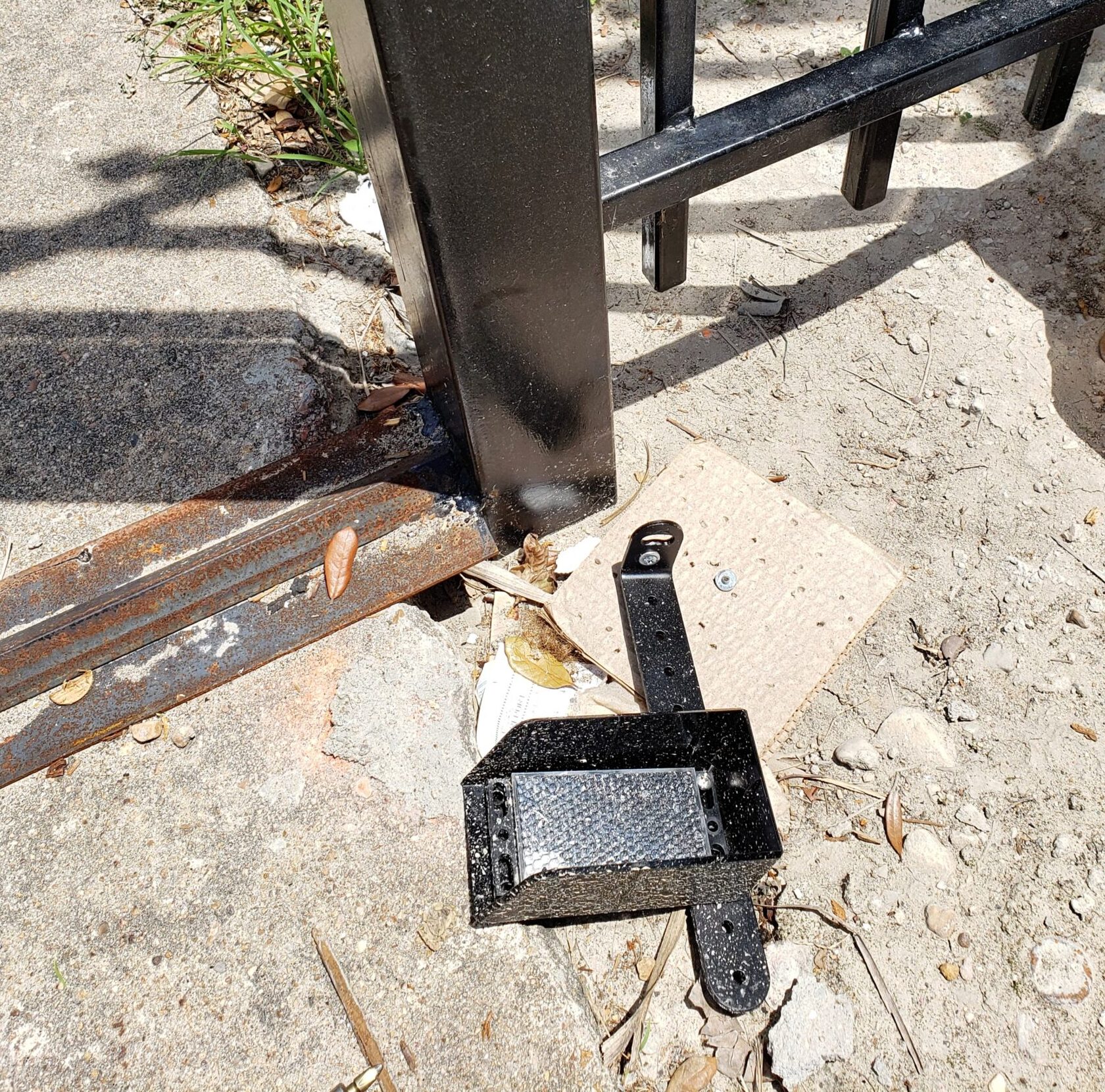
Infrared beams across the gate opening that stop or reverse the gate if something breaks the beam. Misalignment, dirt, rain, and sun glare are the most common Houston faults — and the most common reason a gate won't close.
Loop Detectors
Wire loops embedded in the driveway that sense vehicles to open the gate, hold it open, or prevent it closing on a car. Clay-soil cracking breaks the loop wire, causing phantom reads. We locate breaks and replace loops.
Safety Edges
Pressure-sensitive strips on the gate edge that reverse it on contact. When they fail, the gate loses a critical safety layer. We test and replace them to keep the gate compliant and safe.
Why Does My Automatic Gate Open or Reverse Without a Visible Cause?
A gate that opens randomly or reverses without a visible obstruction usually has a loop detector misreading — a phantom vehicle signal from a cracked loop wire, moisture intrusion, or RF interference. In Houston, clay soil cracking the driveway over embedded loop wire is one of the most common causes. We test the loop under real operating conditions to find the actual trigger.
Random opening is most often an input falsely triggering — a loop sensing a vehicle that isn't there, stray RF firing the receiver, or a board fault. We test each input source to find which one is sending the phantom signal rather than just resetting the system and hoping.
- Loop detectors tested for phantom and intermittent reads
- Receiver checked for RF interference
- Control board inspected for shorts and faults
- Wiring traced for moisture and corrosion
Diagnostics & Estimates
Structural repair and new-install estimates are available at no charge. Gate opener and electronic troubleshooting requires a diagnostic service call. See our Gate Opener Repair page for current diagnostic pricing. We provide a written quote before parts or repair work begins.
Automatic Gate Repair Houston TX — Sensors, Safety & Full System — Frequently Asked Questions
What's the difference between automatic gate repair and opener repair?
Opener repair fixes the motor and drive train; automatic gate repair fixes the whole system that makes the gate safe and self-operating — photo eyes, loop detectors, safety edges, and control logic. A gate can have a good opener and still fail because a sensor or loop has gone bad.
My automatic gate opens by itself — why?
A gate that opens randomly or reverses without a visible obstruction usually has a loop detector misreading — a phantom vehicle signal from a cracked loop wire, moisture intrusion, or RF interference. In Houston, clay soil cracking the driveway over embedded loop wire is one of the most common causes. We test the loop under real operating conditions to find the actual trigger.
Why won't my automatic gate close?
Often a safety device is involved — for example, a dirty or misaligned photo eye or a loop detector still reading a vehicle. These fail safe by keeping the gate open so it never closes on a car or person. We clean, realign, and test the safety chain.
Are automatic gate safety devices required?
Safety devices like photo eyes and safety edges are critical for preventing entrapment, and they're standard on compliant automatic gate installations. We test and repair them to keep your gate safe and functioning as designed.
How much does automatic gate repair cost in Houston?
Gate opener and electronic troubleshooting requires a diagnostic service call. See our Gate Opener Repair page for current diagnostic pricing. Structural repair and new-install estimates are available at no charge, and we provide a written quote before work begins.
Related Services
Emergency Gate Repair Houston
Priority response for gates stuck open, unable to close or blocking access; call to confirm availability.
Security Gate Repair Houston
Security gate opener, access-control and structural repair for residential and commercial properties.
Gate Repair Houston
Full-spectrum gate repair — structural and electronic.
Gate Won’t Close Houston
Photo eye and sensor diagnosis — the most common close fault.
Gate Stuck Open Houston
Security emergency — priority dispatch; same-day service may be available.
Gate Opener Repair Houston
Major brands we service — motor, board, battery, and drive train.
Electric Gate Repair Houston
Transformer, control board, wiring, and surge damage.
Commercial Gate Repair Houston
High-cycle operators, priority dispatch, written estimates.
Automatic Gate Acting Up? Call Rampart Now.
Sensors, loops, safety edges, control logic — we diagnose the whole system.
Same-day service may be available across Houston and Fort Bend County.
(713) 816-5880"Promptly returned my text. Arrived on time and completed repairs to my satisfaction. Rampart is now my first call for gate and opener repair."
"Luis was quick to respond and work was done at a more affordable price than anywhere else we quoted. Patient and friendly. Will call them back!"
"Luis was prompt in providing an accurate estimate, ordered the necessary parts, and installed immediately. 5-star company!"